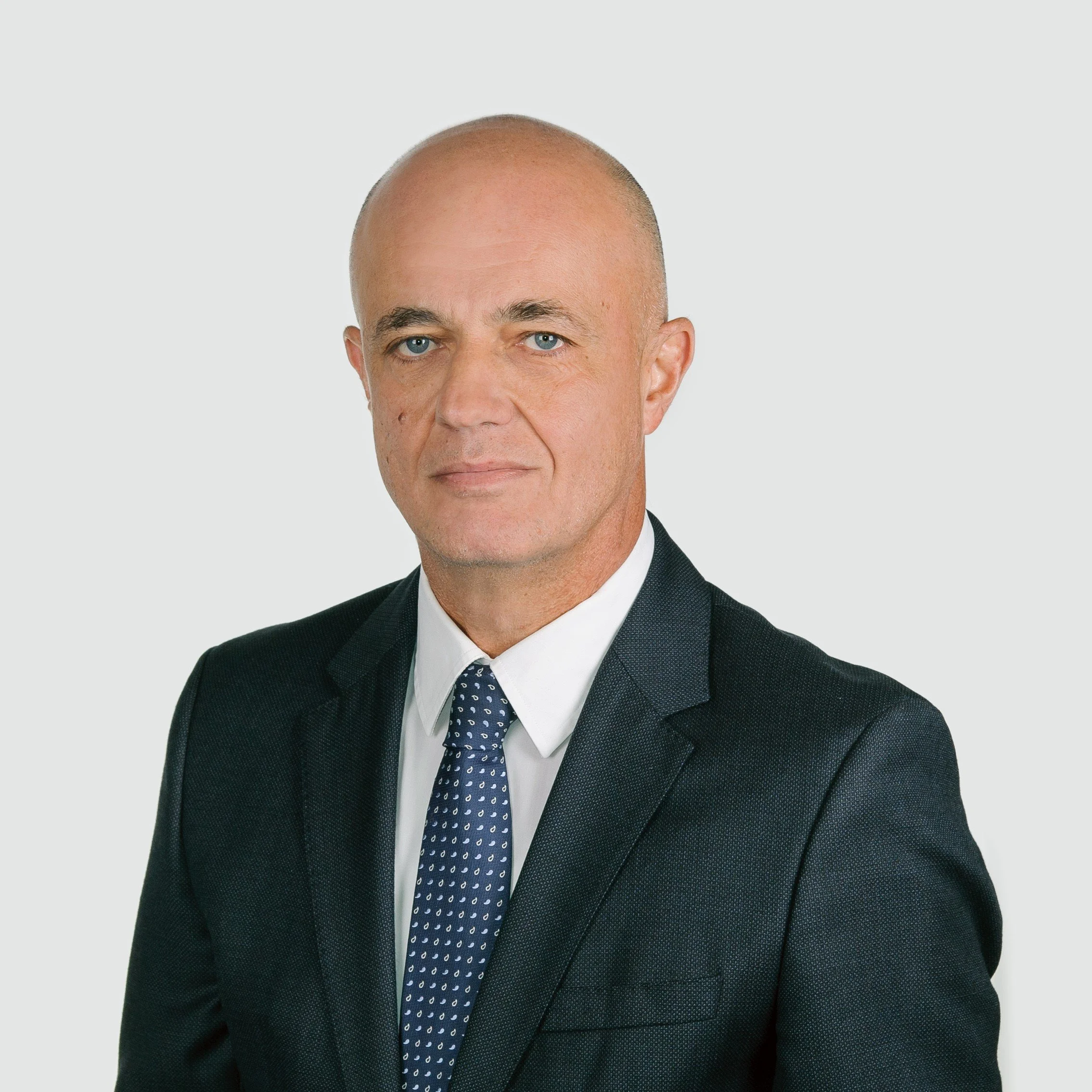
With the global space economy growing at a record pace, expecting to reach $944 Billion by 2033, the industry needs to look at approaches taken in other market sectors to help fuel the growth. I recently caught up with Ilias Tsakalis, Chief Financial Officer (CFO) at Space Leasing International (SLI) to find out more about the financing options that they are helping make available to the industry.
Q: Back in March at Satellite Show in Washington D.C., you announce that you acquired 10 antennas from Microsoft and have leased them to RBC Signals. Can you provide some details on the deal and how it was conceived?
A: These antennas were originally owned operated by Microsoft for their Ground Segment as a Service (GSaaS) business – a market segment they later chose to exit. RBC Signals, our strategic partner and first customer, identified this opportunity and approached us regarding a sale-and-leaseback structure under which we would purchase the antennas and RBC Signals would operate them.
After conducting due diligence, we determined it was a strong investment opportunity. SLI acquired the assets through RBC Signals and then leased them back to the company for a seven-year term. RBC now operates and maintains the stations to serve their customers, growing their infrastructure without a significant upfront capital expenditure.
Q: This is a different approach to how the ground segment has been traditionally operated?
A: Very much so. SLI’s model is to own the assets and lease them to service providers, OEMs, or end users. This mirrors a well-established approach in aviation and maritime. For example, over half of the global aircraft fleet is leased, with structures ranging from “dry” leases where just the asset is leased to “wet” leases where other aspects such as crew and maintenance are included in the leasing structure.
In this case, SLI owns the ground stations, while RBC Signals is responsible for operations, maintenance, and insurance. We provide the capital; they manage the asset.

Ground Station Deadhorse, Alaska
Q: From the customers perspective, what are the benefits of this arrangement?
A: The biggest advantage for our lessee customers is the ability to shift from a capital expenditure (CAPEX) model to an operating expenditure (OPEX) model. Rather than spending millions upfront to acquire assets, customers like RBC Signals can spread the cost over time, aligning payments with revenue generation. This frees up capital for other investments or strategic initiatives.
Q: By operating this way, it offers them much more flexibility?
A: Absolutely. Leasing gives operators the ability to upgrade when new technology becomes available. If you're locked into ownership, you carry the risk of declining residual value as the asset ages. Think of it like leasing versus owning a car: with leasing, you pay monthly and retain the option to upgrade or return the vehicle later.
Leasing also helps overcome capital access challenges. Companies that lack ready cash or prefer not to take on debt can still access critical space infrastructure. This model can be especially valuable as more startups enter the market.
For example, we are not focussing only on ground infrastructure: we are looking at emerging asset classes such as satellite life extension vehicles. As the space economy grows, the availability of leasing will help lower the barriers to entry for a new generation of companies.
Q: We recently saw Eutelsat carry out a similar arrangement, do you see this becoming more prevalent in the industry?
A: Yes. Eutelsat sold its ground infrastructure via a joint venture, retaining use through a lease – a good example of a sale-and-leaseback deal. We’re seeing growing interest across the industry. While I can’t predict how widespread leasing will become, I do believe it’s a compelling alternative that will gain traction, just as it has in aviation, maritime, real estate, and industrial equipment.
Q: So, I want to look into a sale leaseback agreement. Would I come to you with a list of equipment that I require and we would then discuss how to structure the deal?
A: Customers retain full control over the technology they select. We’re technology-agnostic, but we do perform our own assessments to manage the residual value and technology risk. If an asset is likely to become obsolete quickly, it’s not a good candidate for leasing.
Q: And at the end of the lease, does the customer have the option to extend or acquire the asset outright?
A: While our preferred model is an operating lease with no purchase option, we’re flexible and open to structuring extensions or lessee purchase options when appropriate.
Q: The leasing industry has been set up successfully in many different industries but is still new to the Space sector?
A: Our parent company, Libra Group, has deep roots in maritime leasing and later applied that model to aviation, first with commercial aircraft, then helicopters. We saw similar asset characteristics in the space sector: high cost, long lifecycles, and a need for flexible financing. It was a natural extension of our expertise.
Q: You mentioned that you are looking not just at the ground assets but also other assets such as satellites?
A: Certainly. One promising area is software-defined satellites. Unlike traditional satellites that are designed for a fixed coverage area, software-defined models allow reconfiguration in orbit. That flexibility makes them ideal for leasing.
We're also exploring multiple opportunities to acquire existing in-orbit assets through sale-and-leaseback arrangements. This enables operators to unlock capital while continuing to use their prevailing infrastructure.
Q: With the leasing approach for a software defined satellite, you've got one customer that needs an asset for a year. You've got another one that will need an asset the following year, is this approach feasible?
A: In theory, yes. That kind of short-term leasing works well in mature markets like aviation, where there are thousands of aircraft and hundreds of airlines. But the space sector is smaller and less liquid. For now, deals need to be five to seven years to make financial sense. As the market matures, shorter terms may become viable.
Q: You also mentioned that you were looking to work with OEMs?
A: We’re developing vendor financing programs with OEMs. This allows them to offer their products to customers on more attractive terms, spreading payments over time or bundling equipment into an “as-a-service” offering. It’s another way we can help unlock access to space infrastructure and support broader industry growth.