The Propulsion Paradox: How High-Pressure Carbon Cylinders are Solving the Volume Crisis in CubeSats

by Tony Morrin, Director at AMSCC Aerospace
Times have changed dramatically since 1957 and the launch of Sputnik, and so have priorities regarding the Low Earth Orbit (LEO) economy. Where once launch capacity was the defining factor, it is now all about internal volume.
While the cost of reaching orbit continues to fall, the physical constraints of the destination remain significant! This is the new battleground in space deployment: the fight for every cubic centimetre.
The democratisation of space was built on the CubeSat standard. It is no overstatement to say the 1U form factor – a mere 10 x 10 x 10 cm – revolutionised access to orbit. However, as missions evolve from passive data collection to active orbital manoeuvring, engineers face a paradox: propulsion is essential for the mission, but traditional propulsion systems are too bulky to fit inside the box.
For years, the industry relied on standard metallic gas tanks to store propellant. While reliable, these simple cylinders take up too much room. This is where advanced carbon-wrap technology, specifically Carbon Composite Overwrapped Pressure Vessels (COPVs), is changing the SmallSat market. By shrinking the largest component of the propulsion stack, engineers can reclaim vital payload volume.
The "Volume Tax"
To understand why carbon-wrap technology is transformative, we must first appreciate the limited scope of the CubeSat envelope. In a 3U or 6U form factor, the fuel tank is often the largest single rigid object.
Traditional metallic tanks – usually aluminium – require thick walls to withstand high pressures. This acts as a volume tax. A standard metal tank consumes a significant footprint just to maintain structural integrity. Because metal tanks often have lower pressure limits, they must be larger to hold the required propellant mass. This is where the materials science of carbon fibre filament winding changes the equation.
The Carbon Edge
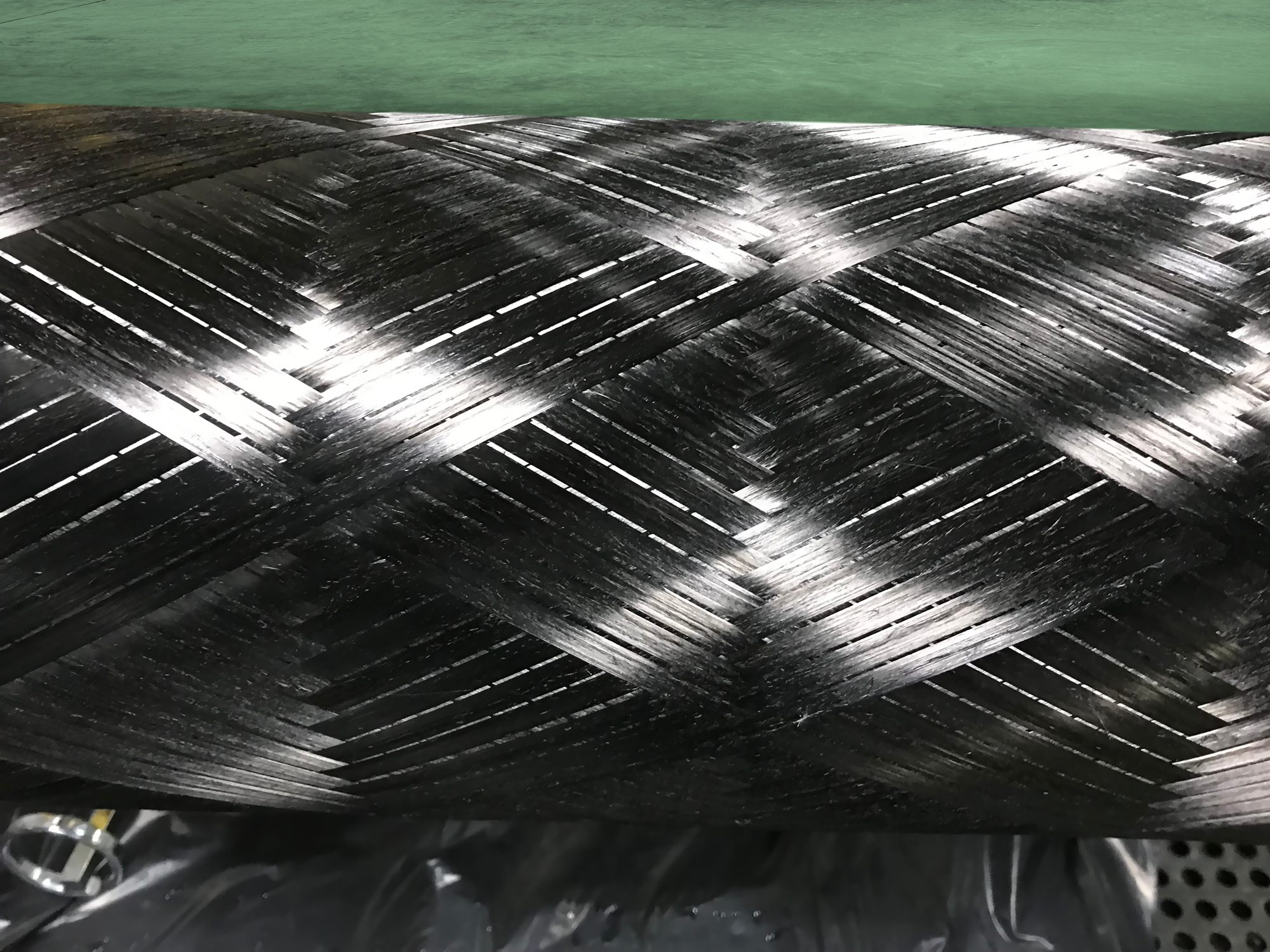
The primary way carbon fibre technology reduces hardware weight is through its exceptional stiffness-to-weight ratio. At AMSCC, this means reinforcing thin, high-performance metal liners with a precision-wound composite shell.
This hybrid architecture delivers two distinct engineering advantages:
Mass Optimisation: COPVs can be up to 50% lighter than traditional all-metal pressure vessels while delivering superior performance – a critical metric in an industry where launch costs are defined by the gram.
Structural Efficiency: By designating the composite shell to carry the high-pressure loads, we can reduce the metal liner to a mere barrier, eliminating the need for thick, heavy walls.
Traditional "wet winding" cylinders are created by coating dry fibres with resin during coiling. One way to further increase COPV efficiency is to use pre-preg filaments. Because these filaments are saturated under clinical laboratory conditions before the winding/overwrap process begins, manufacturers can ensure a precise resin ratio. This precision allows for winding patterns that reduce thickness, but importantly, provide a more even and homogeneous composite thickness across the curved and straight surfaces of the tank.
High Pressure is High Value
The other key to shrinking essential satellite hardware lies in the increased storage efficiency – for example, AMSCC Aerospace tanks are rated for pressures up to 310 bar.
This high-pressure capability allows for a radical change in system architecture. By housing propellant at higher pressures, engineers can store more fuel in a significantly smaller volume, thereby directly addressing the strict envelope constraints of CubeSats.
This allows engineers to integrate larger batteries and more advanced sensors into the design. That saving is a huge efficiency win for SmallSat designers: a smaller tank means more room for the mission's hardware.
Impact on CubeSat Propulsion Systems
Miniaturised propulsion systems are vital for CubeSats to perform necessary orbital manoeuvres. The use of carbon-wrap technology directly supports this evolution. By making the propellant storage tanks smaller and lighter, we enable propellant storage possibilities for a range of integrated propulsion systems.
This expands mission capabilities dramatically. With efficient, lightweight propulsion, CubeSats are no longer limited to passively orbiting or having short operational lives. They can now support complex demands, including:
Formation flying for interferometry or synthetic aperture radar.
Precise attitude control for optical targeting.
Orbit keeping and active deorbiting to ensure space sustainability.
We are seeing companies develop fully integrated micro-propulsion systems that use compact, high-efficiency components to deliver significant total impulse in a small volume. AMSCC’s technology is a key enabler, providing the necessary pressure containment within a minimal mass budget.
Reliability in the Modern Era
The shift from experimental exploration to a sustainable space economy requires components that are not only high-performance but also industrialised. It’s one thing to hand-craft a single tank; it is quite another to maintain sub-millimetre precision and deliver the quantities needed to meet growing space demands.
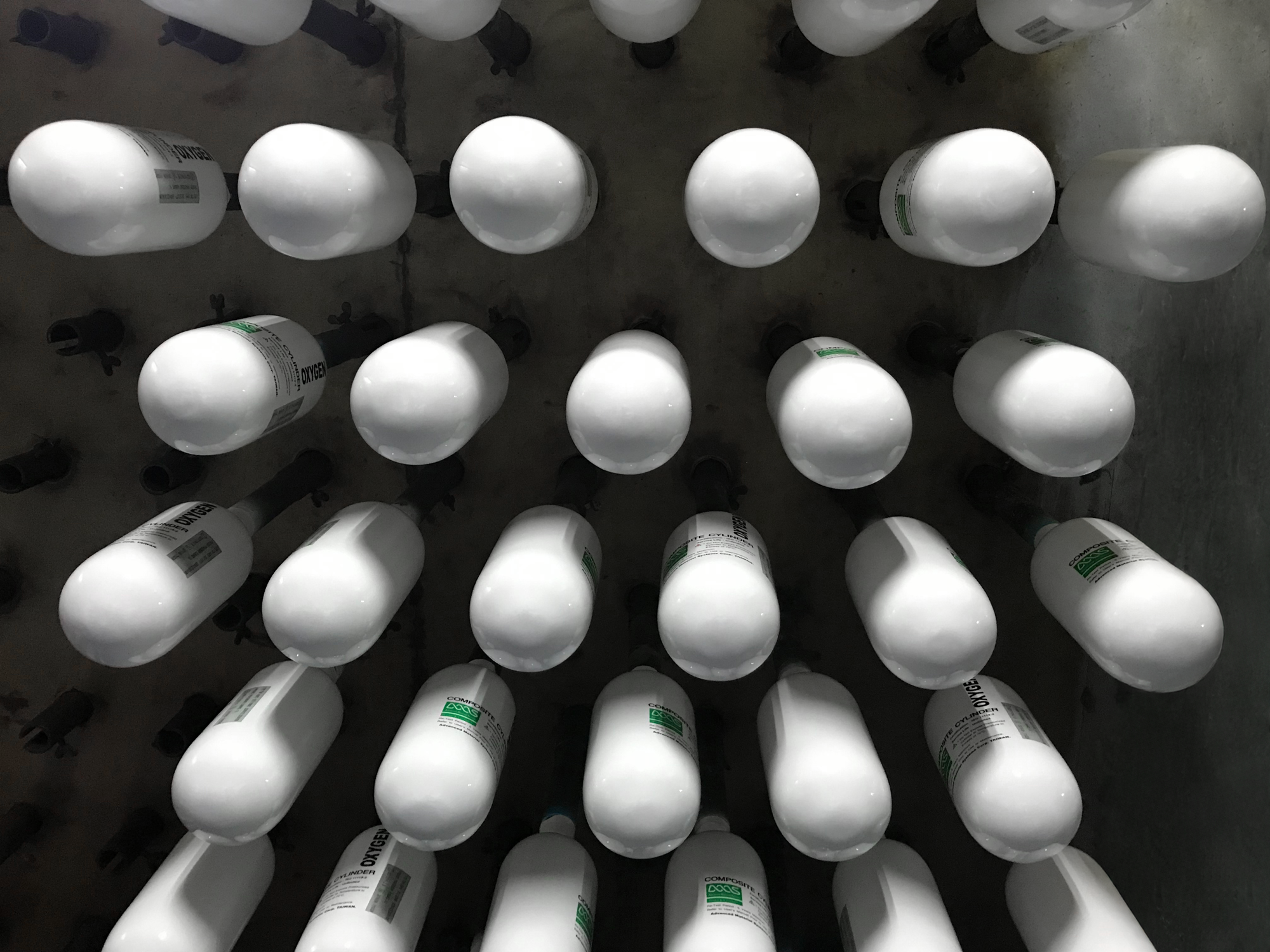
At AMSCC, we have moved beyond prototype thinking. Our tanks have reached TRL 9 status, meaning they are flight-proven and ready for integration. Always look for flight heritage as the ultimate proof of certification. Whether for a single university CubeSat or a commercial constellation of 500 units, standardisation at scale and reliability are non-negotiable.
The AMSCC Perspective
As the demand for high-throughput SmallSats grows, the "envelope" will only get tighter. The future of satellite design is not about making the box bigger; it is about making the components inside it smarter and smaller. In our experience, offering a range of off-the-shelf volume products alongside bespoke, highly customised options provides satellite designers and engineers with all the tools they need.
By switching to high-pressure, thin-walled carbon composite (COPV) cylinders, AMSCC is helping engineers reduce overall satellite mass, which is critical for maximising payload capacity and mission life.