B2Space Successfully Completes a New Test Launch of its Rockoon System from La Gomera (Canary Islands)
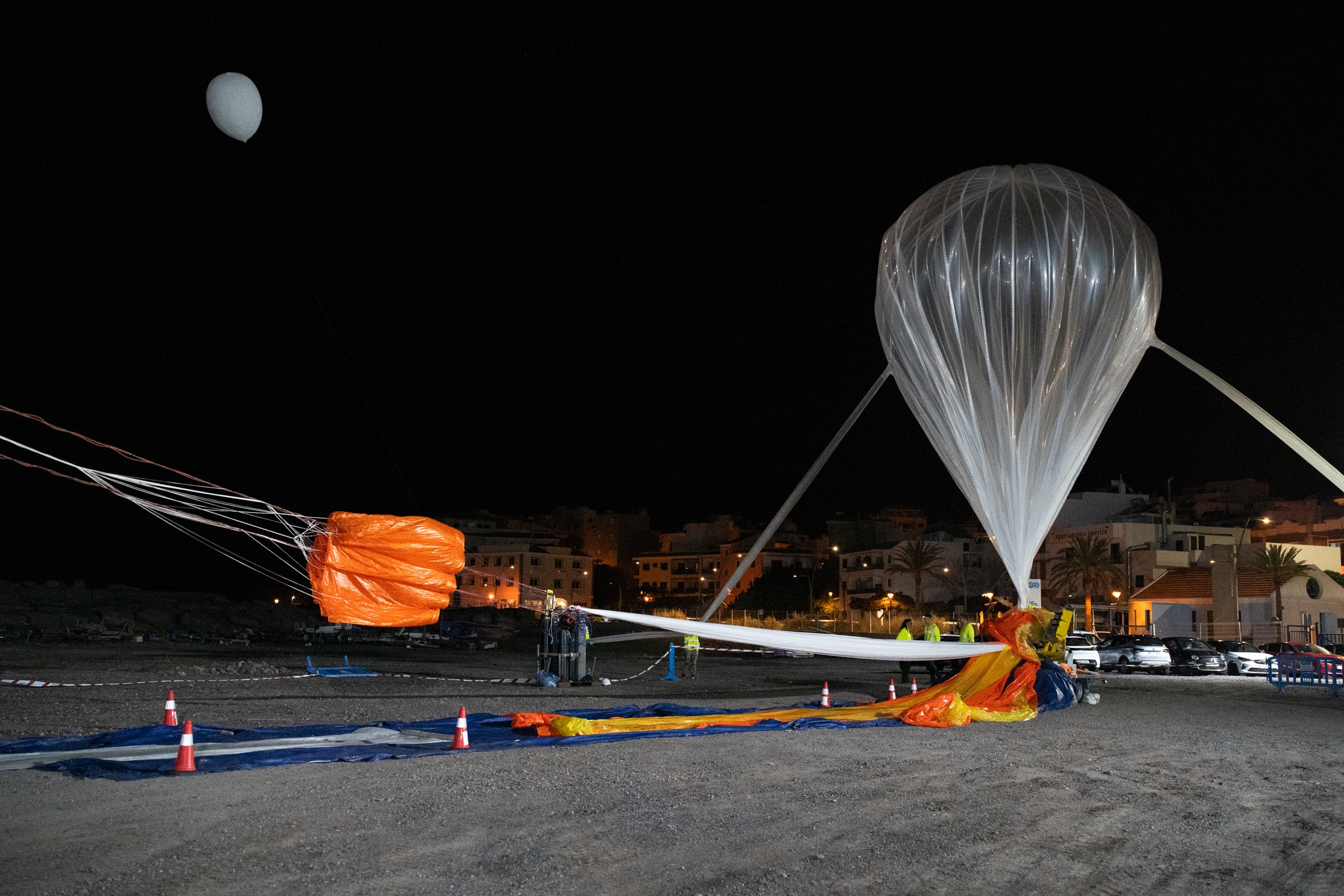
B2Space, a UK- and Spain-based company specialising in High-Altitude Operations (HAO), has carried out a new test of its Rockoon system, a hybrid technology that combines a stratospheric balloon with a rocket—currently using solid propulsion—designed to carry satellites into orbit. The experimental launch took place at 4:00 am on 17 November from the port of Vueltas, in Valle Gran Rey, on the island of La Gomera (Canary Islands).
This test is part of the development campaign for the Rockoon system, whose design, development and validation activities have been progressively carried out in recent years between Wales, United Kingdom and Spain. Following multiple tests and launches, this new operation from La Gomera focused on fully validating the entire Rockoon system, verifying its key components and procedures, using a lower-power rocket than the one planned for the commercial version.
Mission development
The system reached an altitude of 21.5 km, after which all equipment was successfully recovered thanks to the collaboration with the Guardia Civil, ensuring a safe and efficient operation.
A strategic technology for access to Space
The Rockoon programme stands as one of B2Space’s most innovative technological initiatives and a key pillar in the company’s long-term vision for more accessible and sustainable access to space. Thanks to the early and continued support of the Welsh Government, B2Space initiated the development of its Rockoon system in Wales, laying the foundations for what has become a pioneering British–Spanish effort in next-generation launch solutions.
The system integrates a stratospheric balloon with a small launch vehicle, enabling rocket deployment at high altitude. By avoiding the densest layers of the atmosphere during the initial ascent, the Rockoon drastically reduces fuel requirements, environmental impact, and operational costs. The ultimate goal is to provide a flexible and cost-effective service capable of placing small and micro-satellites into low Earth orbit (LEO), opening new opportunities for institutional, scientific, and commercial missions.
Building on this initial support, B2Space is currently progressing a complementary project—also funded by the Welsh Government and carried out in collaboration with the University of Bath—focused on the development of a sustainable, carbon-neutral rocket biofuel. The biofuel uses locally sourced materials such as beeswax and rapeseed wax, representing an innovative approach to greener propulsion. Insights gained both during laboratory development and through upcoming launch campaigns will be essential for assessing the commercial viability of this biofuel within the space sector, not only for B2Space but for broader applications across the global industry.
Beyond launch technologies, B2Space has expanded its presence within the high-altitude ecosystem through commercial Near Space Testing and High-Altitude Platform Systems (HAPS) operations. These services, already used by customers across Europe, have generated key revenue streams that have enabled the company to reinvest in technological development and grow organically across its UK and Spain facilities.