Cornwall-based Goonhilly to Track NASA’s Artemis II Mission as Orion Heads Back to the Moon
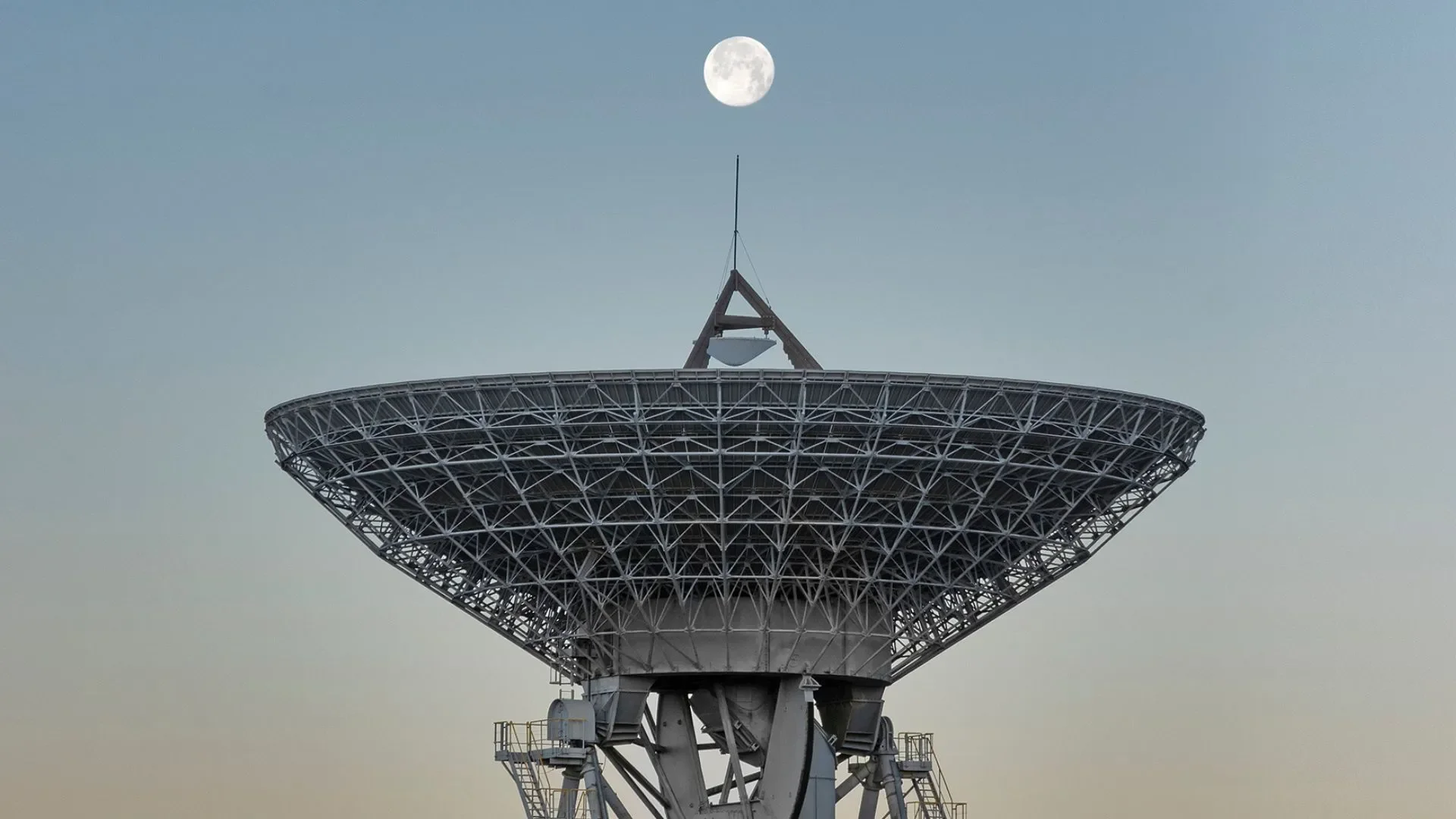
Goonhilly Earth Station, the world’s first commercial deep space ground station, based in Cornwall, UK, will play a role in NASA’s historic Artemis II mission, by passively tracking the Orion spacecraft as it journeys around the Moon and back to Earth.
As the Artemis programme prepares to return humans to lunar orbit for the first time in over 50 years, Goonhilly will participate in the tracking of the Orion spacecraft, demonstrating the UK’s capability to support deep-space missions from British soil.
In 2022, Goonhilly provided critical communication and tracking support for NASA's Artemis I. Utilising its 32-metre GHY-6 antenna and expert teams, the facility tracked the mission’s uncrewed Orion spacecraft and communicated with six of the CubeSats launched on the mission. For Artemis II, tracking will focus on the crewed Orion spacecraft as it journeys beyond low Earth orbit, flying around the Moon, and returning to Earth - marking humanity’s first crewed lunar mission in over half a century.
In parallel, Goonhilly is working with the UK Space Agency and NASA to explore downlink solutions for near-real time space weather measurement enabled by NASA’s Interstellar Mapping and Acceleration Probe (IMAP). This new heliophysics observatory is designed to study particle acceleration and the boundary to interstellar space, and at the same time provides solar wind and space weather observations from Sun-Earth Lagrange Point 1 (L1). The mission also includes a significant UK contribution, with Imperial College London having designed and built one of IMAP’s ten instruments - a magnetometer (MAG) that will measure the magnetic field around the spacecraft in the heliosphere.
IMAP and its I-ALIRT (IMAP Active Link for Real Time) capability is an important contributor to a growing scientific fleet of spacecraft monitoring space weather. The data gathered by these missions plays a critical role within NASA’s Moon to Mars architecture – the long-term framework underpinning the Artemis programme and future crewed exploration beyond the Moon.
Together, these activities highlight the UK’s growing contribution to international space exploration, and reinforces Cornwall’s position as a hub for advanced space and satellite communications.
Matthew Cosby, CTO, Goonhilly Earth Station said: “Artemis II marks a significant milestone in humanity’s return to the Moon, and we’re proud that the capabilities developed here in Cornwall are contributing to that mission. From our site, we will support tracking of the Orion spacecraft, showcasing our readiness for future crewed Artemis missions. At the same time, we are positioning the UK to play a key role in NASA’s longer‑term Moon‑to‑Mars exploration strategy.”
UK Space Minister, Liz Lloyd said: “From broadcasting the Apollo 11 Moon landing to the world in 1969, to now supporting NASA’s return to the Moon with Artemis II, Goonhilly’s rich heritage in space communication continues to inspire. It’s fantastic to see Cornwall once again at the heart of a truly historic moment in human spaceflight. This partnership with NASA shows what British expertise and innovation can achieve on the world stage, while creating opportunities for skilled jobs and growth right here in the UK.”
Goonhilly is one of a limited number of organisations worldwide with the infrastructure and expertise required to support deep-space communications. From its historic role broadcasting the Apollo 11 Moon landing in 1969, to supporting modern missions to the Moon, Mars and beyond, the site continues to play a critical role in humanity’s exploration of space.