FibreCoat Takes its Technology to Space in Major Commercial Milestone
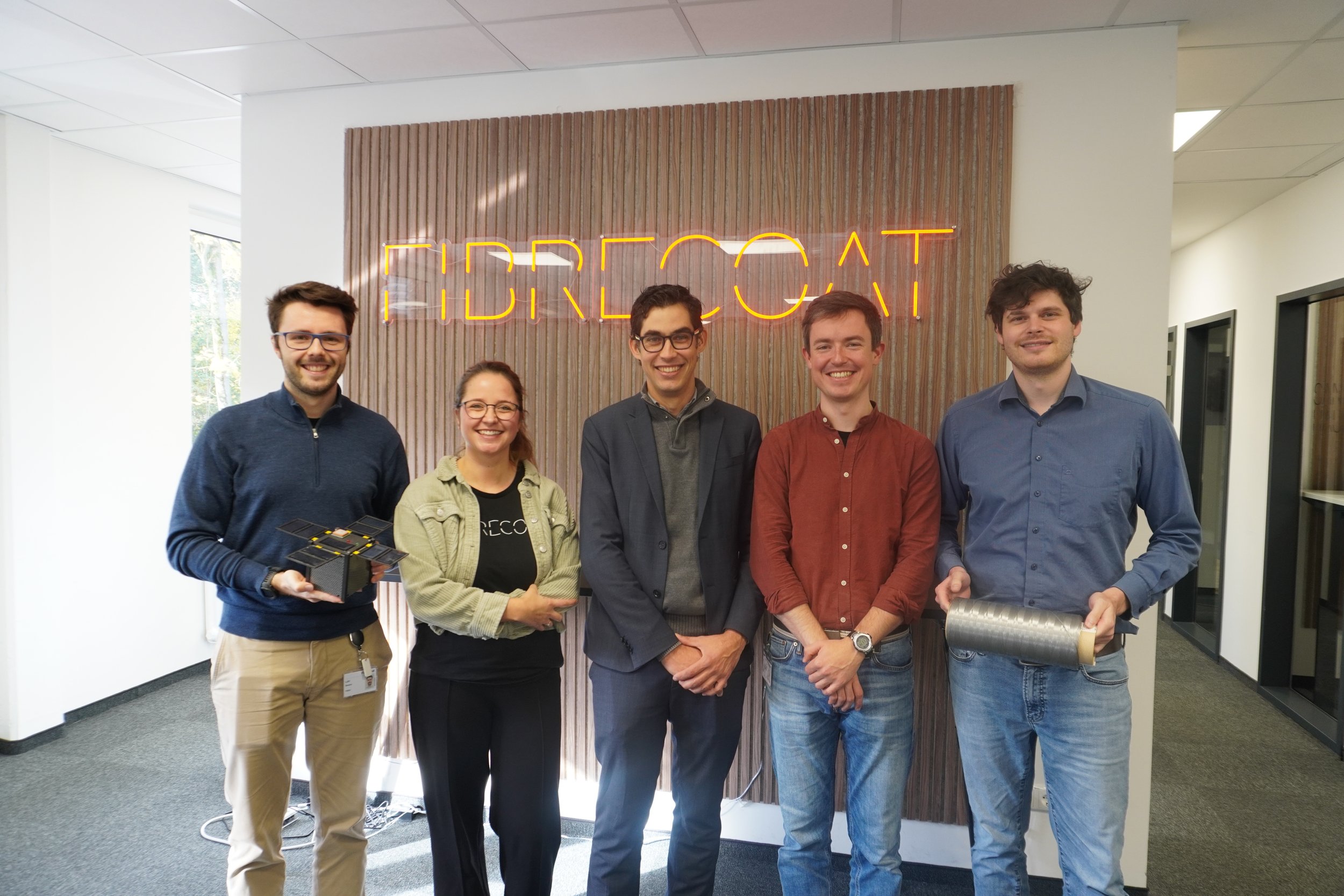
Advanced materials company FibreCoat has gone to space, with its fibre technology launched into orbit on 1 October aboard a SpaceX Falcon 9 rocket in a major milestone for the company and its technology.
The launch was the outcome of a partnership between FibreCoat and Spanish materials company Lofith Composites to develop next-generation thermoplastic composites for space. It marks FibreCoat’s transition from developing and validating its technology on Earth to demonstrating it in orbit.
Over the past year, the two companies worked to take the technology from material development to space flight and testing in orbit. This involved combining and formulating materials, manufacturing satellite parts, carrying out testing, and developing the expertise needed to prepare advanced materials for use in space.
FibreCoat, named last year as one of Fast Company’s Best Workplaces for Innovators, has developed a novel process for coating metals and plastics onto fibres during the fibre-spinning process. Lofith has combined FibreCoat’s coated fibres with its thermoplastic composite technology to create lightweight structural materials designed for highly demanding environments. Lofith’s composite technology can deliver up to 50% weight reduction and 30% greater strength compared with aluminium, while also being recyclable.
The material was carried on a CubeSat launched as part of the Transporter mission. Once in orbit, the satellite allows the companies to gather real-world information about how the material responds to conditions in space. The mission therefore moves the technology beyond laboratory and ground testing and provides evidence of how it performs in the environment for which it is ultimately intended.
Dr Robert Brüll, founder and CEO of FibreCoat, said: “This is one of the biggest moments in FibreCoat’s history. Taking a material from an idea in the lab to hardware flying in orbit is a significant step, and one we have been working towards for years. It shows how far both the technology and the company have come.
“Space is critical infrastructure, but the next chapter in its story depends on advanced materials. This mission gives us the opportunity to prove our technology performs in space, to generate the flight data customers need, and ultimately to show that FibreCoat materials will play a part in the creation of the next generation of space systems. I’m proud of the team for the hard work they’ve put into this, and grateful to our friends at Lofith for partnering with us.”
FibreCoat is widely known for innovation. Its radar-absorbing ‘stealth’ material, developed last year, was named one of the Best Inventions of 2025 by TIME magazine. Its materials have widespread applications – not just for space, but for defence, the automotive sector, and construction, among others. The orbital mission represents another important step in turning those materials technologies into products for some of the world’s most demanding industries.
Following launch, the CubeSat must reach its correct orbit before monitoring can begin. The companies expect to start receiving useful information around one month after launch and will then monitor the material regularly during the mission.
The project is also designed to demonstrate the commercial potential of advanced European materials for space. Lofith is already receiving enquiries from customers interested in the material, and the companies hope the mission will generate further interest from businesses looking for lightweight, high-performance materials. Successful orbital testing would give prospective customers something particularly valuable: performance data from space itself.
The collaboration brings together two European materials companies with complementary technologies. FibreCoat provides its coated-fibre technology; Lofith provides expertise in thermoplastic tapes and composite manufacturing.
Together, the companies aim to develop stronger, lighter and more sustainable materials for satellites and other demanding applications.