Intellian Launches Arctic White OW7MP Manpack, Expanding Mission-Critical LEO Connectivity for Winter Operations
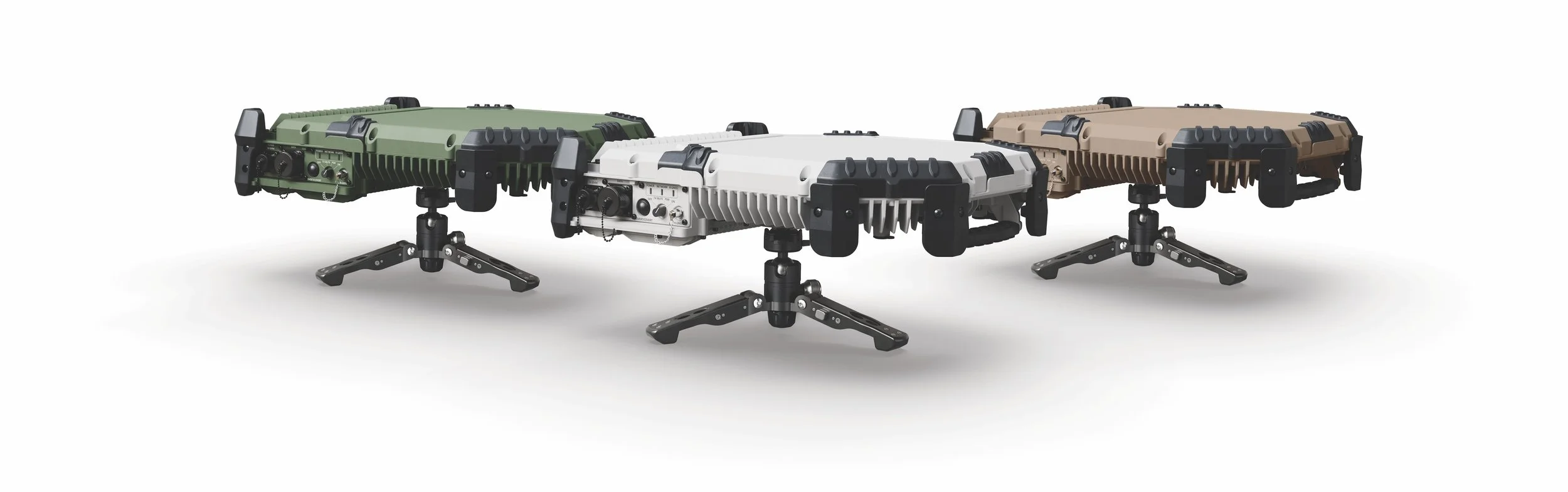
Intellian Technologies Inc., a leading global provider of satellite communication antennas and ground gateway solutions, has announced the addition of an Arctic White variant to its ruggedized, military-grade OW7MP Manpack terminal for the Eutelsat OneWeb LEO network.
Engineered for defense and government units who need uncompromised satellite communications whilst operating in extreme conditions, the new colorway provides optimal winter camouflage, joining the existing Army Green and Coyote Brown lineup.
The Arctic White variant was added to the range following extensive winter field tests with military organizations.
Built on Intellian's proven Active Electronically Scanned Array (AESA) architecture, the system requires no moving parts to acquire a satellite signal, delivering resilient, high-throughput connectivity for Comms on the move (COTM) and Comms on the pause (COTP) scenarios, allowing operators to rapidly establish and maintain communications in contested or GNSS-denied environments.
The first fully integrated military-grade user terminal designed specifically for Eutelsat’s Low Earth Orbit (LEO) satellite network, the OW7MP Manpack redefines battlefield communications, bridging the gap between durability, usability and enterprise-grade, high-speed data for mission-critical environments.
Weighing under 9 kg the OW7MP fits into a standard military rucksack combining size, weight and power (SWaP) requirements. It is tested against the rigorous U.S. Military Standard for Environmental Engineering (MIL-STD-810H) for drop, shock, and vibration, as well as holding an IP67 rating for dust and water resistance and Electromagnetic Compatibility (MIL-STD-461). This durability ensures reliable performance across extreme climates and demanding tactical scenarios.
With one-touch network acquisition for immediate operation, the OW7MP enables external support of an Alternative Positioning, Navigation, and Timing (Alt-PNT) to ensure operation in GPS-denied environments thanks to its auto detected Resilient Global Navigation Satellite System (R-GNSS). It is also optimized for low power consumption to maximize mission duration for up to five hours on external batteries depending on usage.