Mission Microwave Introduces 750W Ku-Band MOAB, Expanding Solid-State Portfolio for SATCOM Networks
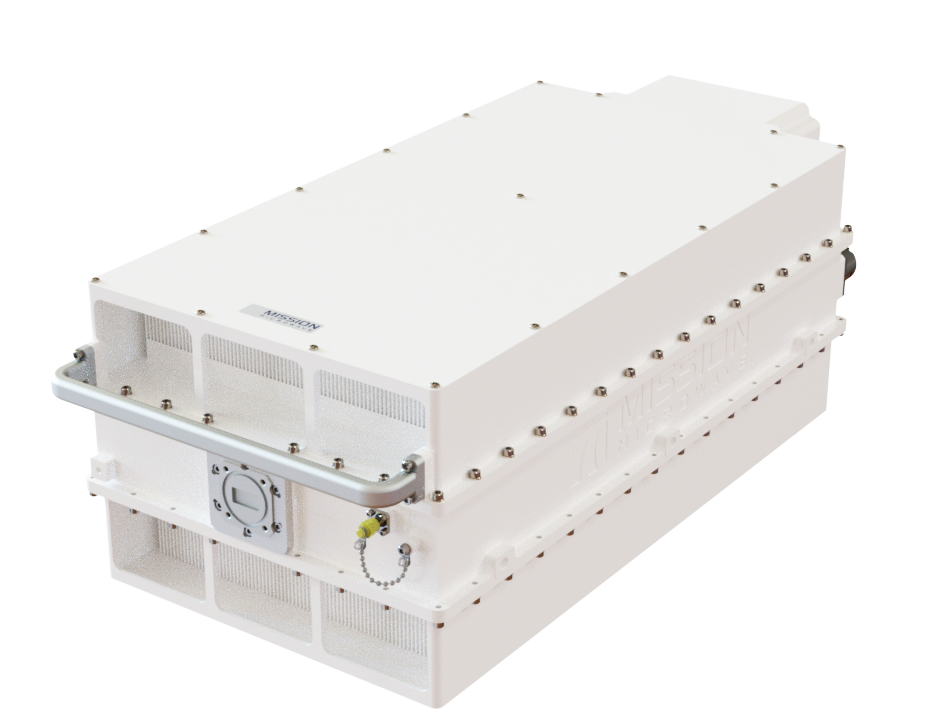
Mission Microwave Technologies, LLC (“Mission Microwave”), a leading provider of solid-state power amplifiers and block upconverters for satellite communications, have announced the launch of its 750W Ku-Band MOAB. The addition of this amplifier completes Mission Microwave’s Ku-band portfolio, which spans 25W to 1kW, giving satellite operators a modern alternative to legacy TWT-based systems. The lineup also supports the growing demand for high-capacity, high-efficiency satellite communications infrastructures.
The new amplifier delivers 750W of GaN solid-state power in a compact 48-lb package designed to mount directly at the antenna. By integrating the amplifier closer to the feed, operators can reduce waveguide losses, increase usable RF output power, and simplify overall system architecture.
“The shift from TWT amplifiers to solid-state technology is accelerating across the SATCOM industry,” said Francis Auricchio, President and CEO of Mission Microwave. “With a complete portfolio of Ku-band amplifiers covering from 25 Watts up to 1 Kilowatt, we can provide operators with a scalable solid-state platform that gives them the most reliable and cost-effective solution over the life of their systems.”
The 750W Ku-Band MOAB is built on Mission Microwave’s revolutionary solid-state amplifier architecture, based on spatial power combining GaN devices, which enables the smallest size and lightest weight, as well as high efficiency, drawing only 2.8 kW at linear output, minimizing heat generation and operating expense. The amplifier is engineered for continuous gateway operation and includes 1:1 and 1:2 redundancy configurations for mission-critical applications.
Mission Microwave will introduce the new 750W Ku-Band MOAB as part of its expanded Ku-band solid-state lineup at the upcoming SATELLITE Show event in Washington DC in March.