NASA, Penn State University, and LANL Successfully Launched X-ray Observatory Aboard SpaceX “Twilight”
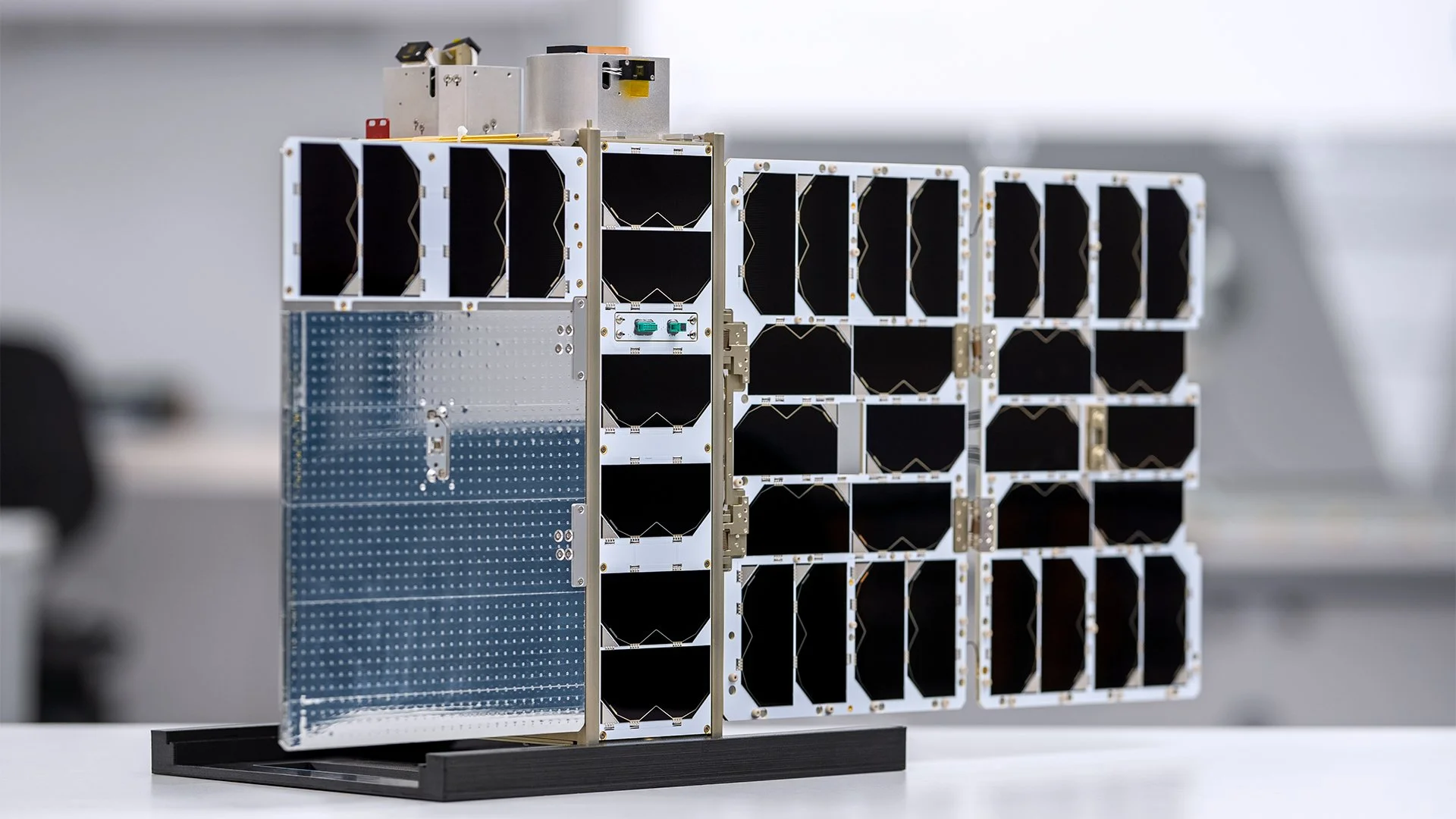
BlackCAT CubeSat Credit: Kongsberg NanoAvionics
BlackCAT (the Black Hole Coded Aperture Telescope) is an X-ray space telescope integrated into a 6U CubeSat bus by Kongsberg NanoAvionics to detect and study high-redshift Gamma-Ray Bursts (GRBs) that happen when massive stars collapse into black holes or when neutron stars collide. It launched aboard SpaceX’s first “Twilight” rideshare mission on 11 January 2026.
Successful two-way communications with BlackCAT were established soon after launch, showing healthy satellite telemetry. This marks the continuation of Kongsberg NanoAvionics’ 100% first-contact success rate across more than 50 satellite missions to date.
The satellite mission is NASA-funded and led by Penn State University, where the payload was designed and built, and has flight software contributions from researchers at Los Alamos National Laboratory (LANL).
BlackCAT expects to detect dozens of GRBs each year, pinpoint their locations, and transmit real-time alerts to the ground via the Iridium satellite network.
These alerts will allow rapid follow-up by other observatories, such as the James Webb Space Telescope (JWST), which will help scientists to
• map cosmic reionization, a period when the universe transitioned from darkness to light.
• measure ionizing radiation escaping from early galaxies.
• study how metals formed in the early universe.
BlackCAT will also help locate electromagnetic counterparts to gravitational wave events, complementing research from facilities such as the Laser Interferometer Gravitational-Wave Observatory (LIGO).
Capturing the bright afterglow from X-rays to radio waves will enable “multimessenger” studies, combining signals across different parts of the electromagnetic spectrum to reveal the physics behind these rare cosmic events.
Despite its small size, BlackCAT's soft X-ray sensitivity and real-time alerts make it a powerful new tool for time-sensitive transient astronomy.
Atle Wøllo, CEO of Kongsberg NanoAvionics, said: “This mission fits nicely into NanoAvionics proven track record of building satellites for leading research organizations globally, including NASA’s ACS3 (Advanced Composite Solar Sail System), which successfully demonstrated deployment of a new composite boom design, and NinjaSat, an X-ray observatory for Japan’s research institute RIKEN, among many others.”