Portal Space Systems Raises $50 Million Series A to Advance Rapidly Maneuverable Spacecraft Capabilities
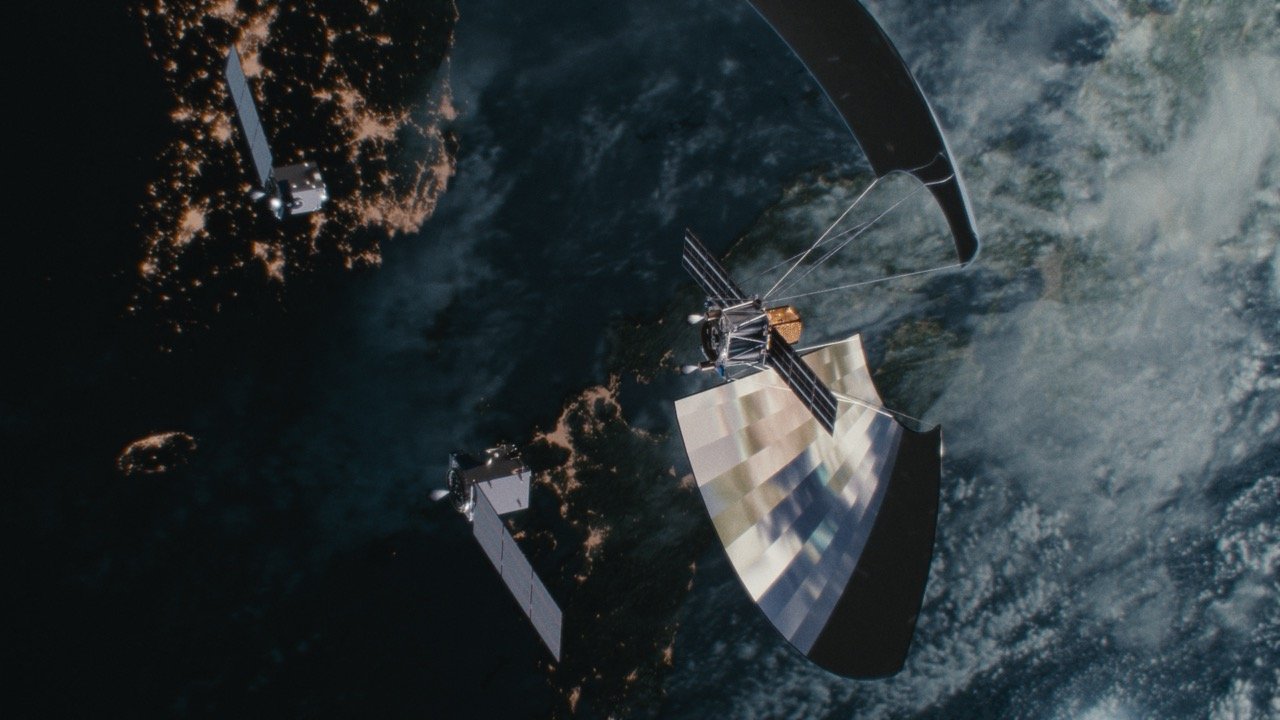
Portal Space Systems, a next-generation spacecraft manufacturer developing rapidly maneuverable vehicles for operations across and between orbital regimes, today announced it has raised $50 million in Series A funding. The round was led by Geodesic Capital and Mach33, with participation from Booz Allen Ventures, ARK Invest, AlleyCorp, and FUSE.
The financing comes as a broader shift is taking hold across the space ecosystem: while access to orbit has improved significantly, the ability to move on orbit remains limited. As orbital activity increases and mission requirements become more dynamic, maneuverability is becoming a defining capability for how space is used, secured, and commercialized.
The composition of the investor group reflects that shift. Geodesic Capital brings an international dimension through its focus on U.S. and Japan technology collaboration. Booz Allen Ventures contributes deep experience in national security and defense systems. Returning investors Mach33, AlleyCorp, and FUSE underscore continued confidence in Portal’s execution and long-term strategy.
“Our customers don’t just need access to space. They need the ability to operate across it,” said Jeff Thornburg, CEO and founder of Portal Space Systems. “The systems that succeed in this next phase of space exploration will be those that can move quickly, deliberately, and repeatedly across and between orbits, and that’s been Portal’s focus since day one.”
Industry Shift Toward Mobility
Most satellites today are designed for fixed mission profiles, with limited maneuverability once on orbit. This approach is no longer effective as space becomes more congested, operationally complex, competitive, and strategically important.
Operators across defense, civil, and commercial markets are increasingly requiring spacecraft that can reposition, adapt to changing mission needs, and extend operational lifetimes.
And increasingly, it is a capability that investors are paying attention to.
“The future of space is dynamic, and that shift is being recognized globally,” said Rayfe Gaspar-Asaoka, Partner at Geodesic Capital. "Portal Space is pairing deep propulsion expertise with advanced spacecraft development built for mobility, reliability, and scale. Geodesic is thrilled to co-lead Portal’s Series A and work alongside Jeff and the team as they continue to expand what’s possible in space.”
Signals From Defense
If the commercial market is beginning to feel the pressure of immobility on orbit, the defense sector has been confronting the challenge for much longer.
The participation of Booz Allen Ventures, an organization deeply embedded in national security and defense systems, adds weight to the concept that maneuverability is not just a commercial advantage, but a strategic necessity.
“Our customers depend on advanced technology to accomplish mission outcomes quickly and efficiently,” said Travis Bales, director of Booz Allen Ventures. “Booz Allen Ventures' investment in Portal Space Systems will advance orbital warfare through the development of rapidly maneuverable spacecraft - something we know our customers need. We remain committed to the space domain and to delivering outcomes to help accomplish the most challenging missions for the U.S.”
Speed and range, long decisive in every other domain, are now entering the basic calculus of space operations.
Since Portal’s Last Fundraise
The Series A follows Portal’s $17.5 million seed round announced in 2025, one of the largest publicly disclosed seed financings in the sector at the time. In the year since, the company has advanced from early development to flight-tested systems, to flight heritage, and expanded operational capability across its spacecraft portfolio.
“We are founder-driven investors, and simply fell in love with Jeff, Ian, and Prashaanth,” said Brendan Wales of FUSE. “Their execution has exceeded our expectations, and we’re proud to continue supporting the company as it enters this next phase of growth.”
Over the past year, Portal has:
Achieved flight heritage on critical avionics systems, including its flight computer and power system, through the successful launch of its Mini-Nova spacecraft
Advanced propulsion development, completing ground testing of its HEX thruster and reaching operational performance levels in thermal vacuum conditions
Progressed its Starburst spacecraft, with Starburst-1 manifested on SpaceX’s Transporter-18 mission in Q4 2026 to demonstrate rendezvous and proximity operations, rapid retasking, and significant orbital maneuverability
Continued development of its Supernova spacecraft, targeting a 2027 debut mission, with more than 80 percent of its systems shared with Starburst to accelerate development and reduce risk through flight heritage
Expanded its team to approximately 40 employees, expecting to scale to 100 in 2026
Initiated development of a 52,000-square-foot manufacturing facility in Bothell, supporting the transition from development to production
Established early mission partnerships, including work with Paladin Space on maneuverable debris removal solutions, DRAAS, and engagement with commercial customers such as Starlab
These milestones come less than a year after the company’s seed announcement and reflect an accelerated development cadence across both hardware and mission planning.
“Portal Space Systems is building a category-defining company through its ability to unlock a new era of maneuverability in space,” said Brannon Jones, Principal at AlleyCorp. “The team’s deep technical and industry experience across SpaceX, NASA, L3 Harris, and the Air Force Research Lab, is a huge reason whywe see them emerging as the clear leaders to solve one the most critical bottlenecks in the orbital economy of space.”
Commercializing Solar Thermal Propulsion
Portal’s Supernova spacecraft is powered by solar thermal propulsion, a technology previously validated at NASA and Air Force Research Laboratory programs but never commercialized. By combining advances in materials, thermal systems, and deployable structures, Portal is working to bring this capability into operational use, enabling higher delta-v and more flexible mission profiles compared to traditional propulsion systems.
Portal expects to use the Series A funding to accelerate spacecraft development, expand manufacturing capabilities, and support upcoming Starburst and Supernova missions.
As co-lead investor in the round, Mach33 sees Portal’s approach as foundational to the next phase of space infrastructure:
“As investors in deeply technical fields, we only back a founding team when we have extraordinary conviction in the team’s ability to execute technically and commercially. More so when doubling down. We’re proud to lead this round alongside Geodesic and other great co-investors. We are confident that Portal will become the Space Mobility Prime in the near future,” said Aaron Burnett, Group CEO of Mach33.