Rocket Lab Successfully Launches 85th Mission and First Dedicated Launch for European Space Agency
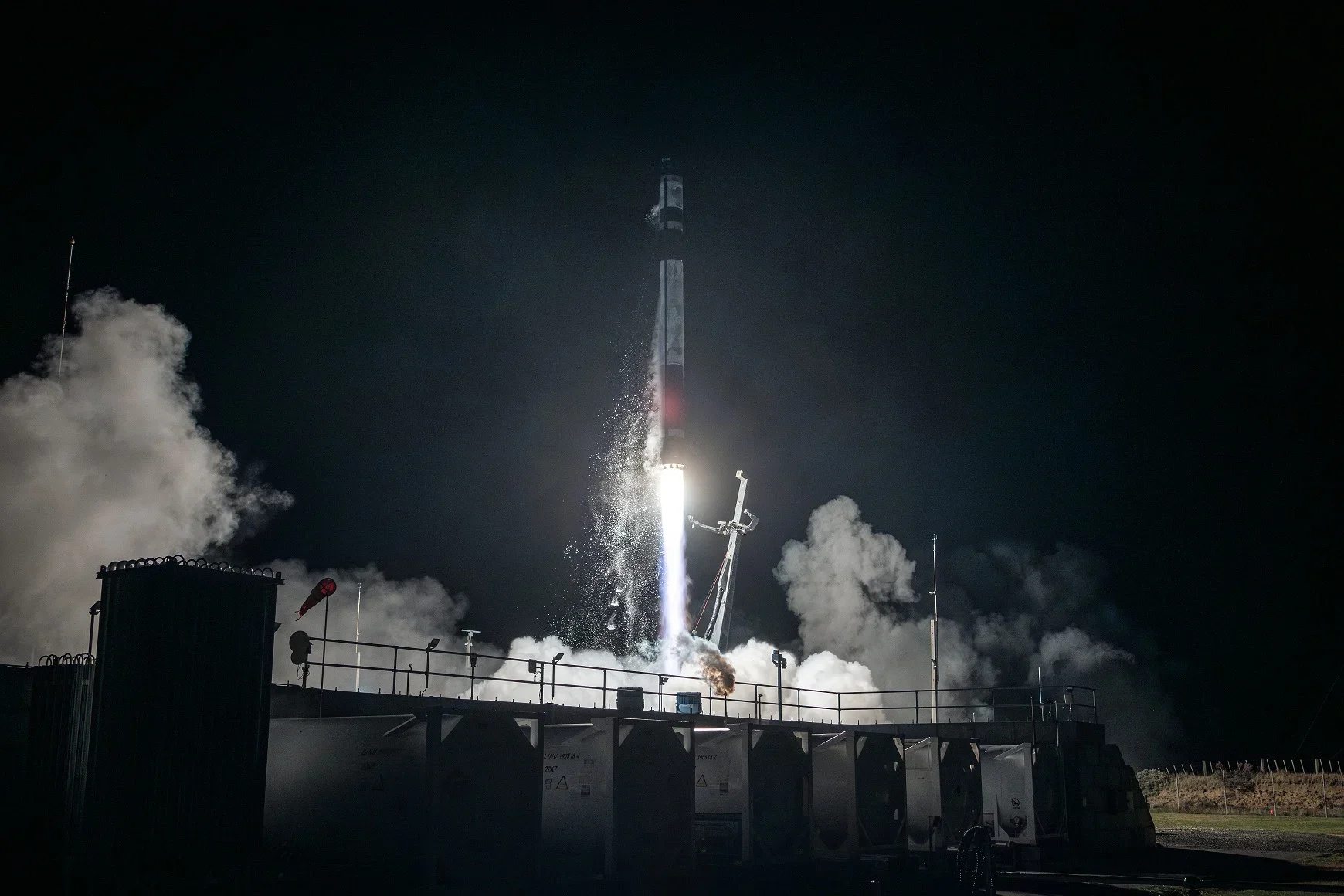
Rocket Lab Corporation (Nasdaq: RKLB) (“Rocket Lab” or the “Company”), a global leader in launch services and space systems, successfully completed its first dedicated launch for the European Space Agency (ESA), demonstrating Electron’s key and growing role in supporting space agency missions with repeatable and reliable commercial launch services.
The launch, named “Daughter Of The Stars”, lifted off from Rocket Lab Launch Complex 1 in New Zealand on March 28th at 10:14 pm NZT to successfully deliver ESA’s “Celeste” mission to orbit: the first two spacecraft of a satellite navigation demonstration mission in low Earth orbit at 510 km. ESA’s Celeste mission will demonstrate how a low Earth orbit fleet of satellites can work in combination with the Galileo constellation in medium Earth orbit that provide Europe’s own global navigation system. Built by two consortia led by GMV (Spain) and Thales Alenia Space (France), the pair of ESA spacecraft will test next-generation technologies for a broad variety of future uses in autonomous vehicles, maritime navigation, wireless networks, emergency services, and critical infrastructure projects across Europe.
This launch continues Rocket Lab’s record of 100% mission success for national space programs including NASA, JAXA, KASA, and now ESA, underscoring Electron’s importance to space access both domestically and internationally with its consistently precise, reliable, and responsive launches.
Rocket Lab founder and CEO, Sir Peter Beck, says: “Orbital accuracy is critical for the beginning of a new constellation. It’s why satellite operators across all mission types choose Electron for a dedicated launch, because they know they can rely on our rocket’s precision and accuracy to establish a solid foundation in orbit. This mission for ESA is just the latest example of Electron's constancy as the launch industry leader globally for small sat missions and a proud moment for the team to deliver mission success for such a prestigious organization as ESA.”
“We are pleased to see our first two Celeste satellites starting their important mission, as they open a new era for satellite navigation in Europe. Over the past two decades, Galileo and EGNOS have become a total success, fuelling our society, generating economic growth and ensuring European independence and security. Now, ESA’s Celeste will demonstrate how a complementary layer in low Earth orbit can enhance Europe’s current navigation systems, making them more resilient, more robust, and capable of delivering entirely new services,” adds Francisco-Javier Benedicto Ruiz, ESA’s Director of Navigation.
“Daughter Of The Stars” was Rocket Lab’s 6th launch of the year and 85th launch overall. Upcoming launches in 2026 include missions for commercial Earth observation, international space agencies, national security, and hypersonic technology development.