ThinKom Unveils Space-optimized ThinAir Nexus Aircraft Antenna
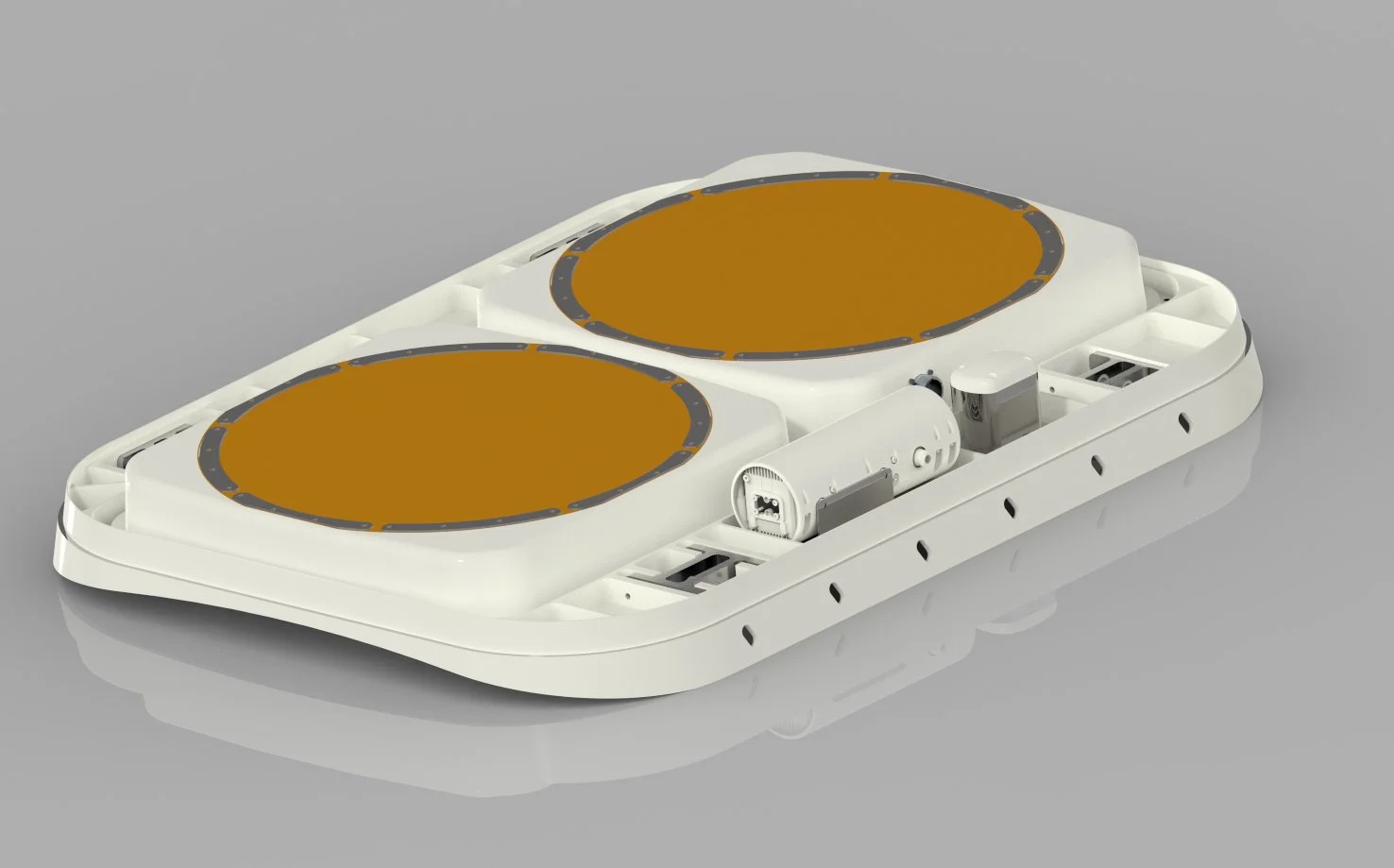
ThinKom's ThinAir Plus hardware combines with Quvia's management software to deliver the ultimate in flight connectivity platform for airlines
A new generation of multi-orbit inflight connectivity is ready to fly, with the introduction of the ThinKom ThinAir® Nexus, a compact antenna rewriting what is possible for airlines. Sitting at the crossroads of efficiency, size, power, and flexibility, Nexus offers industry-leading, flight-proven performance in a package size similar to single-orbit electronically steered antenna (ESA) solutions.
Nexus matches the size and installation simplicity of ESAs, while besting them in performance and capabilities. Multi-orbit, multi-constellation, multi-provider flexibility is built in. Airlines can confidently choose Nexus knowing that it supports gigabit performance for GEO, MEO, and LEO constellations today, with flexibility to add new networks in the future with a simple modem swap.
“Airlines demand and deserve flexibility and reliability as they invest in inflight internet solutions,” explains Jeff Sare, ThinKom’s chief commercial officer. “Our new ThinAir Nexus solution delivers the most efficient and reliable multi-orbit, multi-constellation antenna to ever fly, now space-optimized for a smaller installation footprint.”
ThinKom’s patented VICTS technology allows for an open network architecture design, supporting satellite constellations in every orbit and delivering the most efficient communications available. This allows service providers to deliver guaranteed SLAs across high-density hubs and sovereign regions where single-constellation solutions might struggle or simply be unavailable.
“We are excited to extend our position as the long-time industry leader in efficient antenna solutions,” added Mark Silk, chief executive officer of ThinKom. “Nexus delivers the reliability and performance we’ve always excelled at, now in a more compact footprint to ease installation and increase aircraft options.”
The company’s VICTS hardware already supports existing GEO and NGSO constellations, including SES Open Orbits, Hughes JUPITER In-Flight, Telesat Lightspeed, and multiple sovereign networks. The orbit-agnostic Nexus provides a future-proof hardware solution that ensures long-term flexibility as satellite constellations evolve.
Airlines can choose from multiple modem options, depending on network needs. An integrated modem can join the KANDU and KRFU integrated on the antenna outside the fuselage for maximum simplicity and minimum interior impact. Alternatively, ThinAir Nexus supports a multi-modem MODMAN as interior equipment, boosting constellation compatibility and network redundancy.
Nexus also offers a simplified approach to installation, with just four lugs on the fuselage. ThinKom continues to work with both Airbus and Boeing to ensure compliance with current and next-generation line-fit and retrofit installation requirements. The compact size is also compelling for the regional jet market.
ThinKom’s VICTS technology boasts 65 million hours of on-wing operating experience, with unparalleled reliability. The low power draw enables Nexus to operate continuously gate-to-gate, even in the most extreme climates. As the coolest antenna on the market, it avoids thermal failure pitfalls seen more frequently in ESA designs.