Viasat Confirms Successful Launch of ViaSat-3 F2
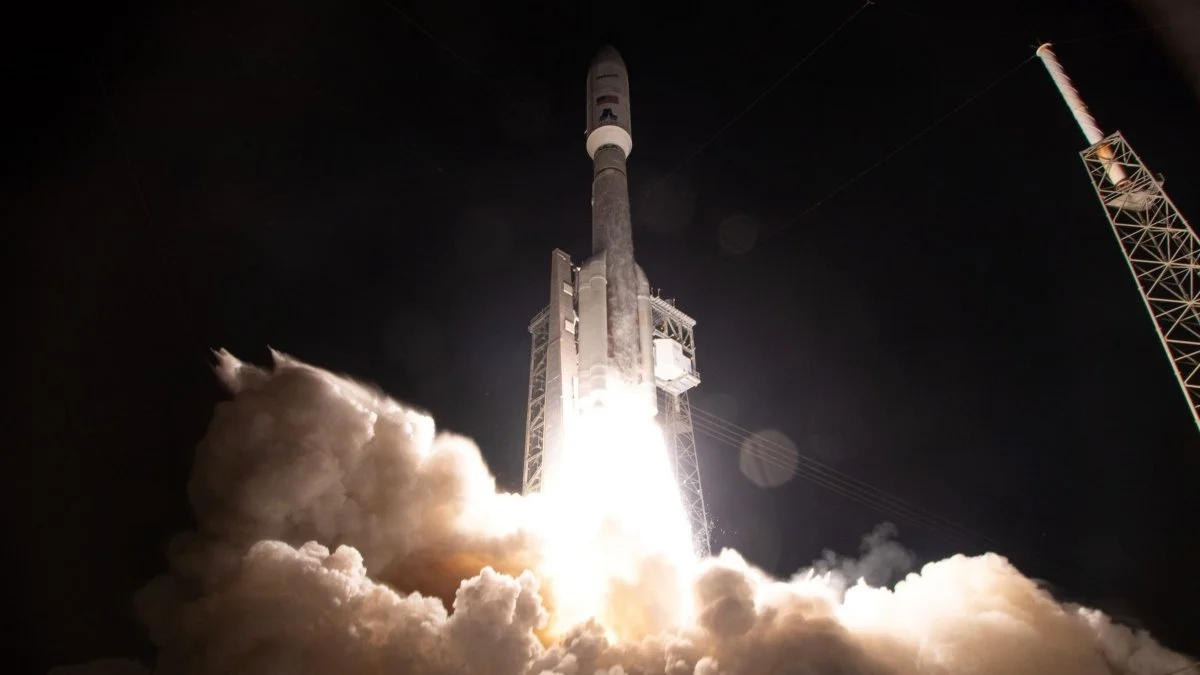
Viasat, Inc. (NASDAQ: VSAT), a global leader in satellite communications, today announced the successful launch and initial signal acquisition of the ViaSat-3 Flight 2 (F2) satellite. The satellite lifted off yesterday at 10:04 p.m. EST aboard a United Launch Alliance (ULA) Atlas V551 from Cape Canaveral Space Force Station in Florida.
Just over three and a half hours after liftoff, ViaSat-3 F2 successfully separated from the launch vehicle, and the first signals were acquired shortly thereafter, confirming the satellite’s readiness for the next phase of operations.
ViaSat-3 F2 will provide services over the Americas region and represents the latest addition to Viasat’s global satellite network. The satellite is designed with state-of-the-art technology to maximize efficient, flexible bandwidth deployment and provide enhanced performance for commercial mobility, fixed broadband and defense customers, among others, as demand for resilient, high-quality connectivity accelerates. ViaSat-3 F2 is anticipated to double the overall bandwidth capacity of Viasat’s entire existing fleet. The successful launch of the satellite marks a significant step forward for Viasat’s global, multi-orbit network roadmap, helping Viasat further provide unrivaled flexibility to move and concentrate capacity wherever it’s most needed—on land, at sea, or in the air.
“The successful launch and initial signal acquisition of ViaSat-3 F2 are a testament to the dedication and expertise of our Viasat team and partners,” said Mark Dankberg, Chairman and CEO of Viasat. “This cutting-edge satellite will significantly scale our network’s performance and capacity, enabling exciting new connectivity services and supporting our customers’ growing needs across the Americas.”
What’s Next
In the coming days, the satellite will deploy its solar arrays and begin navigating to its final geostationary orbital location over the next several months. After reaching its final position, ViaSat-3 F2 will complete its deployments, including its reflectors, before undergoing extensive in-orbit testing and network integration, which is critical to effective operations and services. Anticipated service entry remains on track for early 2026.
About the ViaSat-3 Satellites
The ViaSat-3 Ka-band satellites are each designed to combine ultra-high capacity with dynamic flexibility and the advanced capability to move its significant bandwidth capacity to address real-time demand in high-concentration areas, delivering connectivity where and when it’s needed most. This dynamic flexibility in allocating bandwidth is advantageous to service dynamic markets where the location of high-demand hotspots is continuously changing over the course of the day.